
MONITORING AND EVALUATION
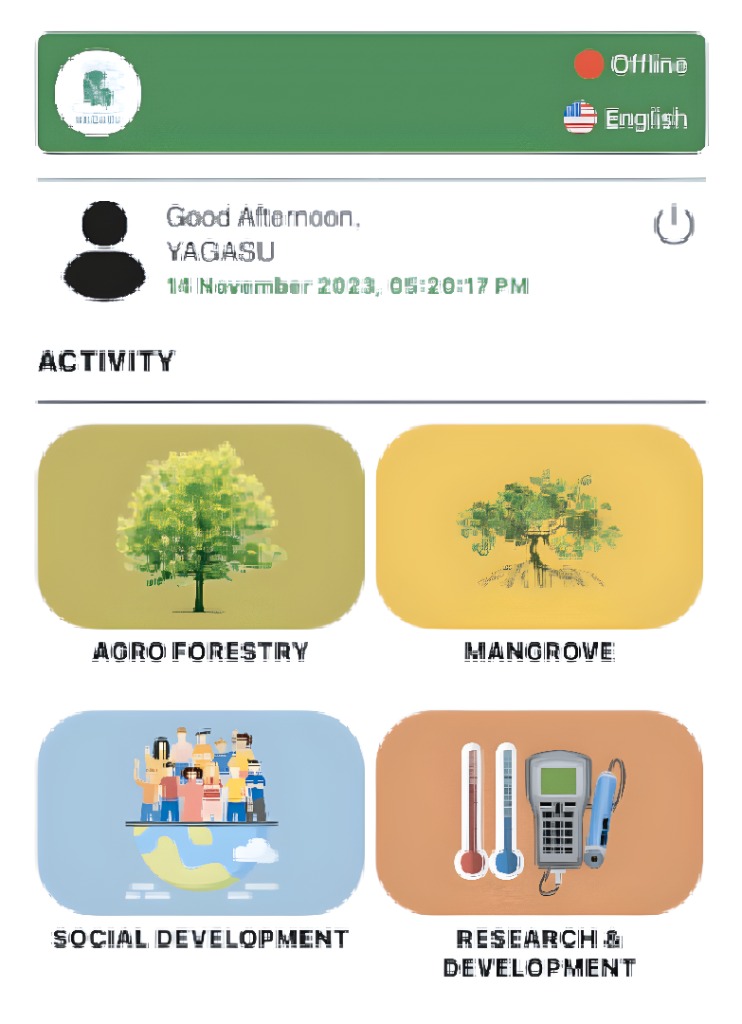
We conduct several layers on Monitoring, Reporting and Evaluation (MRE) for each project that include MRE on planted trees, community commitment and social economic. The monitoring is conducted monthly by field officers, six-monthly evaluation by senior team, and annual census monitoring by join team. The monitoring census will identify the percentages of mortality and the reasons of mortality (natural and climate factors or human intervention).

MONITORING PLAN FOR GHG EMISSION REDUCTIONS
The main target of MRE is to find reliably quantify carbon stocks and GHG emissions in project scenario during project crediting period, prior to each verification, with the following main tasks:
- Monitor project carbon stock changes and GHG emissions.
- Estimate ex-post net carbon stock changes and GHG emissions, and GHG emission reductions
THE MONITORING PLAN WILL CONSIST OF AN INFORMATION ON:
- A description of each monitoring task to be undertaken, and technical requirements
- Parameters to be measured (tree growth, SOC analysis, strata, etc.)
- Data that will be collected and data collection techniques (census monitoring)
- Frequency of monitoring (annually or every 3 years)
- Quality assurance and quality control (QA/QC) procedures
- Data archiving procedures
- Roles, responsibilities and capacity of monitoring team and management
CAPACITY BUILDING
Capacity development for local communities in sustainable economic activities aims to improve skills, knowledge, and resources of individuals or groups to carry out business practices independently. The field action includes technology training, natural resource processing and sustainable business practices.
Capacity building is not only conducted for Indonesian communities but also delivered to China-ASEAN conservation networks. The trainings on mangrove and agroforestry carbon accounting were conducted in Malang, Medan and Bandung participated from China and ASEAN countries. The Yagasu team facilitated the transfer knowledge on mangrove food processing that was conducted for women groups in Zamboanga – Philippines and Chrolong – Cambodia. We also share knowledge on a new technology and Artificial Intelligence (AI) with Peking University Shenzhen Graduate School on mangrove monitoring and research.
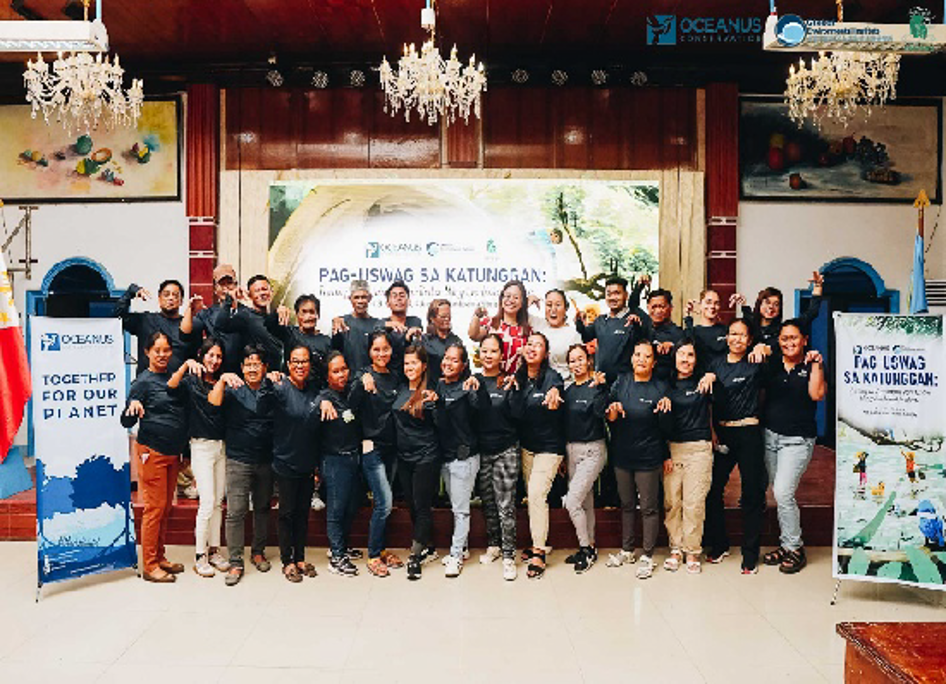
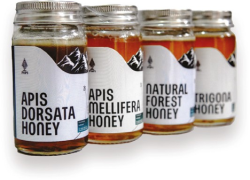
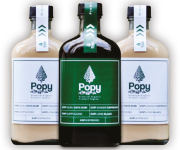
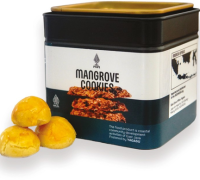

We also help communities in preparing business plans, such as building a transparent, accountable and sustainable financial management system, guided by professional and experienced trainers. The trainings include:
- Financial structure
- Budgeting
- Financial recording
- Payment and receipt systems
- Reporting
- Audit and evaluation,
- Reserve fund and investment planning. With a good financial management system, community groups can increase mutual trust between members, maintain business continuity, and achieve common goals more effectively.
Primary beneficiaries
- Smallholder fishermen that create silvo-fishery products and mangrove eco-tourism.
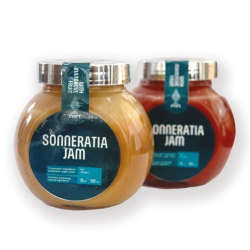
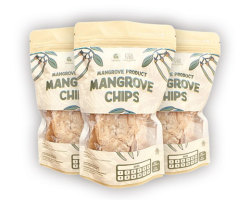
- Yagasu places a major emphasis on women’s empowerment by supporting women-led interventions on mangrove food processing, organic batik mangroves (natural dye from mangrove components – bark, twig, leaf, etc.), dried fish and shrimp paste, etc.
Other stakeholders
- Investors and payors: carbon investors (including Livelihoods Fund, VNV-Sumitomo, Apolownia, Nippon Koei-Oteki, EVI and GMT- Marex.
- Enabling parties: local-level administrators (village and district-level)
- Knowledge partners: local university, BRIN, CIFOR, LCF investors (Danone, Hermes, Michelin, Schnieder, etc.), China-ASEAN conservation partners, etc.


BLUE CARBON PROJECT IMPACTS

Sustainable conservation # species: 23 mangroves, 8 mammal, 16 reptile dan amphibia, 32 invertebrate (crab, shrimp and jelly fish), 73 birds, 41 fishes dan 9 migratory birds.


Correlation between mangroves and fishery production:
ht = 0.6883Et + 5.23623 Et2, ecosystem restoration and protection increase 27,21% fishery production in coastal areas.
PROJECT IMPACTS TO COMMERCIAL BIODIVERSITY
Sustainable commercial biodiversity production from mangrove ecosystem in Aceh and North Sumatra: 7 – 12 tons of crabs, 3 – 5 tons shrimps and 500 – 700 tons of fishes per weeks for all the year around.


DIRECT IMPACTS FOR LOCAL COMMUNITY INCOME

THE USES OF MANGROVES IN THE PROGRAM SITES


MANGROVES FOR FOOD SECURITY


Acanthus illicifolis
Nypa fruticans
Avicenia marina, alba, oficinalis
Sonneratia caseolaris , alba
Bruguiera gymnorhiza
Avicenia marina:
protein (4.83%), fat (0.24%), carbohydrate (25.25%), amylase (17%), water (37.15%) and vitamin C (70.6 mg)
Bioactive compounds: alkaloid, flavonoid, fenol, terpenoid, steroid, saponin and tanin


AGROFORESTRY CARBON PROJECT
- Performing Sustainable Watershed management for carbon credits, soil- and water conservation, natural disaster prevention and green economic development.
- GHG emission reductions – VCUs ex-ante of 4,500 ha is 3,024,000 tones CO2-e for 30 years (100,800 tones CO2-e per year).
- Creating new jobs for 6,000 families (small scale farmers, women and youths).
- Creating new incomes from agroforestry products (coffee, cacao etc.), fruits, handicraft and other small household business, and eco-tourism.
- Increasing adaptation level of local communities from climate change impacts, such landslide, drought, land erosion, frequent flood, and loosing natural resources for their daily in come.

- Our CCB study showed an increase of 9.2% annual family income after project implementation
- Setting-up Village Policy Initiatives on Village Spatial Plan (VSP), Ecosystem Protected Area (CPA) and Village Regulation (VR) in the villages and successfully reduce the threats of land conversion to the level of below 25%.
- The stable condition of watershed ecosystem supports the production of high quality of organic coffee, cacao and other cash-crops.
PROJECT SITE
- To get 100,000 tCO2 per year carbon credits, the project site is 4,500 ha per cycle, it can be extended into 10,000 ha.
- We committed to provide 10% buffer sites (450 ha) for potential ecological leakage.
- The indentified project sites ready to plant for agroforestry carbon project are 128,042 ha of degraded watershed ecosystem in Java.
- Land ownership: community lands (non-state forests).
- The use of lands for the project will be stated in the MoU between Yagasu and landowners.
METHODOLOGY
- Apply VERRA – VM 0047 methodology on Afforestation, Reforestation and Revegetation (ARR) in which the project activities will increase vegetative cover in the project boundaries.
- Use a combination of the two quantifications of area based approaches and both areas are defined to not overlapping areas since the project start.
- Use Tier 3 IPCC Guidelines for SRN registration that is a method for calculating GHG emissions using the most detailed equations (modelling and sampling approaches), combined with the diversity of local emission factor approach in the project sites.
ENVIRONMENTAL RISKS
- Long period of dry season (el-nino)
- Land-slide during heavy rainy season
- Land-use change of project sites for commercial purposes
- Potential ecological leakage is predicted 10 – 15% during the credit period.


CARBON TARGET OF AGROFORESTRY
Conservative Carbon Value of Agroforestry 4500 Ha

- We use published data or scientific reports to generate values for GHG emissions in the same or similar systems on geomorphic hydrologic, and biological properties, and management regimes as those in the project areas of Indonesia.
- Composition of planted trees in each sub-ecosystem: lowland (20%), midland (50%) and highland (30%).
- The steam diameter of 2nd layer is assumed that after 10 years is significantly nor growing.
- Carbon sequestration is calculated based on the annual growth of vegetation carbon stocks of mix species in lowland-, midland- and highland watershed + annual SOC evolution.
- The reference of SOC estimation (1.12 tCO2 ha-1 yr-1) is based on the Tier 3 IPCC.
- If the community can increase the 30 years 1st layer density from 278 to 333 trees/ha (5 x 6 m), there will be an additional 3.44 tCO2 ha-1 yr-1 in lowland, 3.43 tCO2 ha-1 yr -1 in midland and 4.15 tCO2 ha-1 yr-1 in highland.
- Scenario 1 : Conservative value of VCU is 3,024,000 tCO2 for 30 years (100,800 tCO2 per year).
- Scenario 2 : total VCU will increase around 18% if the community increase the density from 278 to 333 trees/ha is 3,545,100 tones CO2-e for 30 years (118,170 tones CO2-e per year).
-
Scenario 3 : total VCU will increase more if the average density of Cropping Pattern 2 from 333 to 400 trees/ha. Potential additional CO2 removal from ARR extension will be from carbon of under story plantaion and conservation of vegetation cover at the surrounding planting sites.

HARVESTING COFFEE

DRYING COFFEE CHERRY

COFFEE BEAN

BOTTLE OF COFFEE

MULBERRY LEAVES

STROBILATHES

SILKWORM

WITHERING LEAVES

SILK COCOON

PASTA PROCESSING

HAND WOVEN SILK

