

Yagasu team conducted various research on carbon accounting, biodiversity, economic valuation of ecosystem and social economy. The findings provide qualified and reliable information to take informed decision for the project to pass carbon- and CCB/SDG certification, and for scientific publication. The carbon research and CCB study in our project sites show a strong correlation between carbon, climate, biodiversity, environment, and livelihoods impacts
CARBON AND BIODIVERSITY RESEARCH UNIT (CBRU)
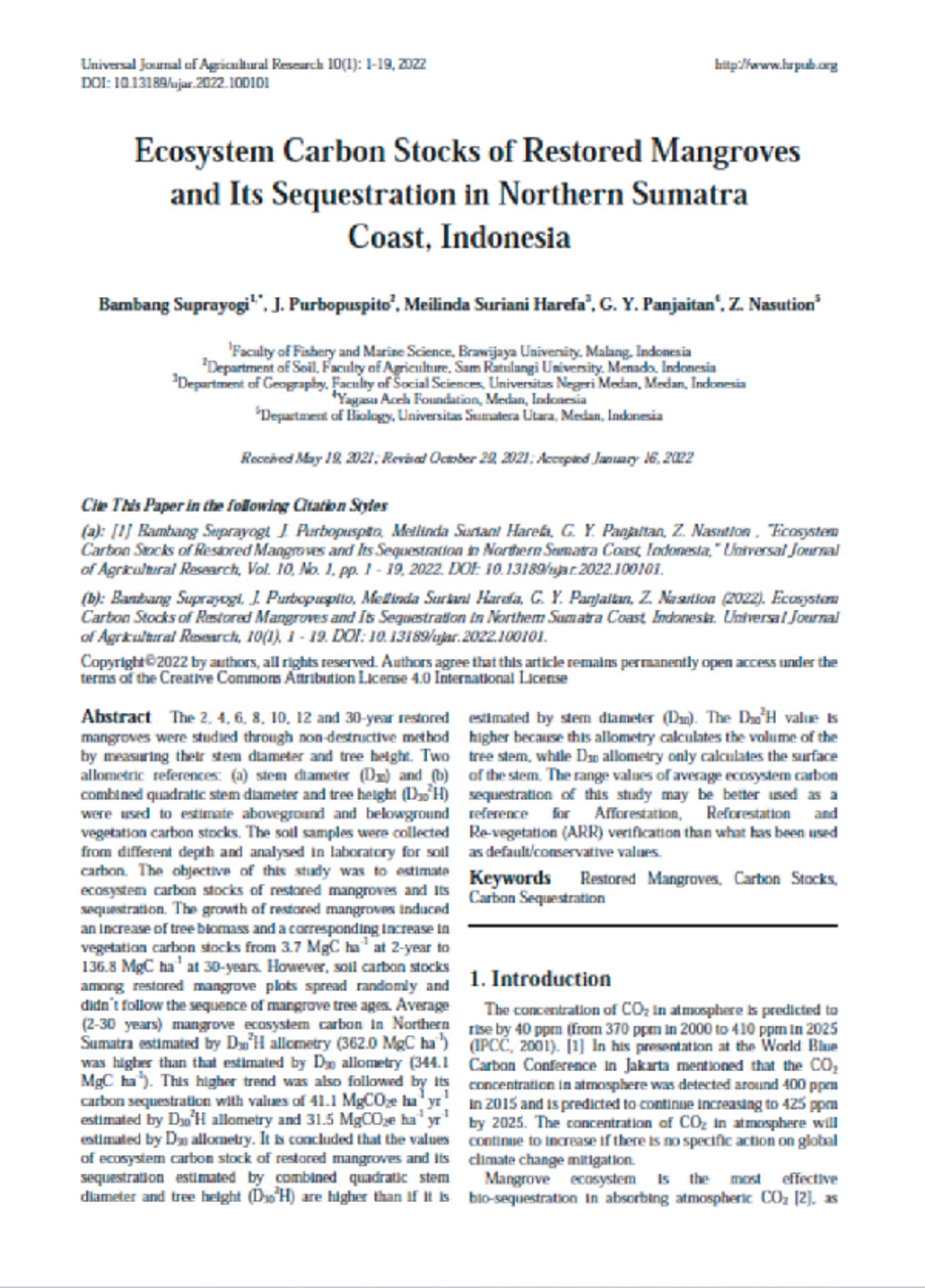
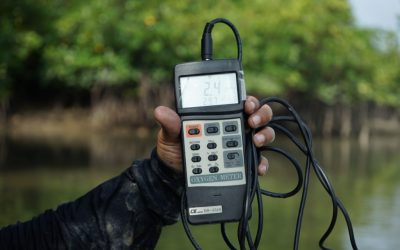
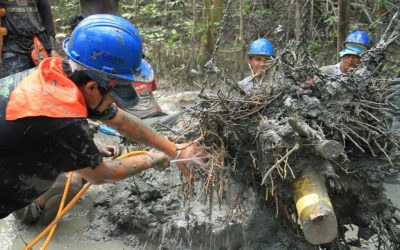
Yagasu manages the CBRU in 10 ha mangrove forest in North Sumatra since 2009. We established 21 plots permanent using “systematic sampling with random start” for annual carbon and biodiversity monitoring. Each sampling plot consists of 4 permanent poles that form a square of 20 x 20 m. We mobilize local communities to oversight, monitor and guard the CBRU through weekly patrol and regular monitoring activity.
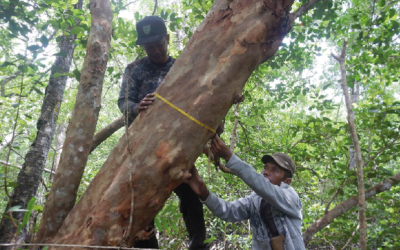
The target of carbon monitoring included tree growth and soil samples and then be analyzed for carbon stocks. In addition, the biodiversity monitoring includes new growth of mangrove species, mammals, reptiles, amphibian, fishes, birds and macro- benthos and other biological parameters.
JOIN RESEARCH
Yagasu has conducted join research activities on carbon and mangrove and agroforestry commodities with national universities (USU, Gajah Mada, IPB, UNIMED, UNY and UMM – Malang), with BRIN and CIFOR, and with Peking University Shenzhen Graduate School.
CARBON ACCOUNTING RESEARCH
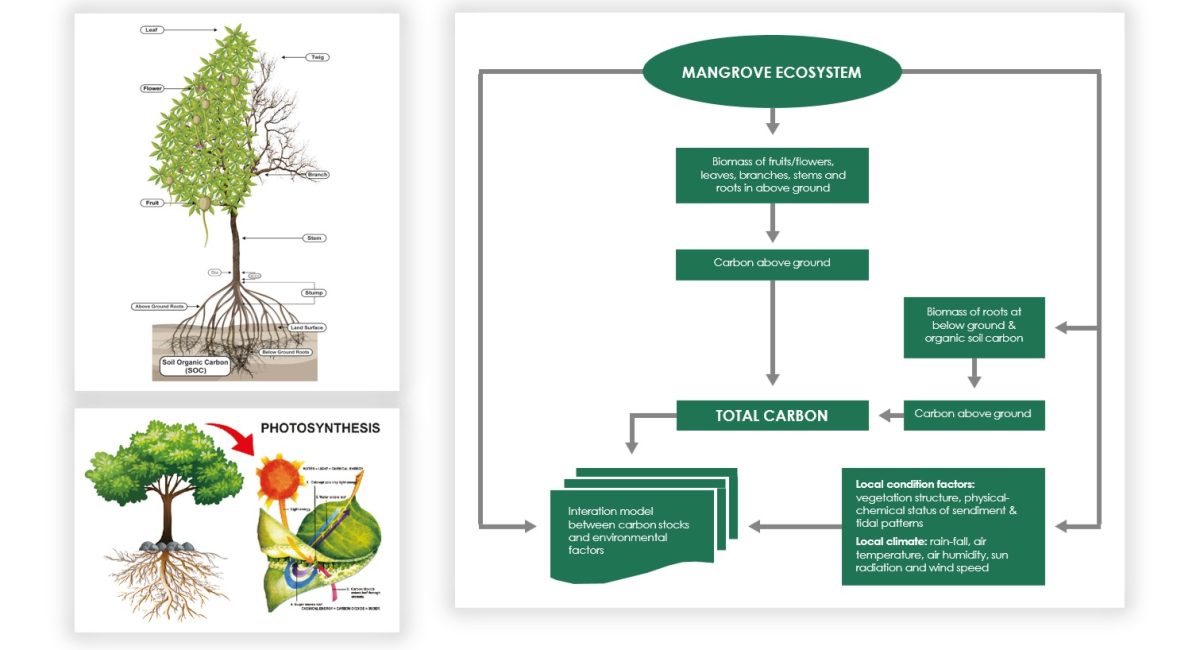
MANGROVE CARBON ESTIMATION
- Destructive methods: on 2, 6 and 10 years; and at 5 soil carbon depth.
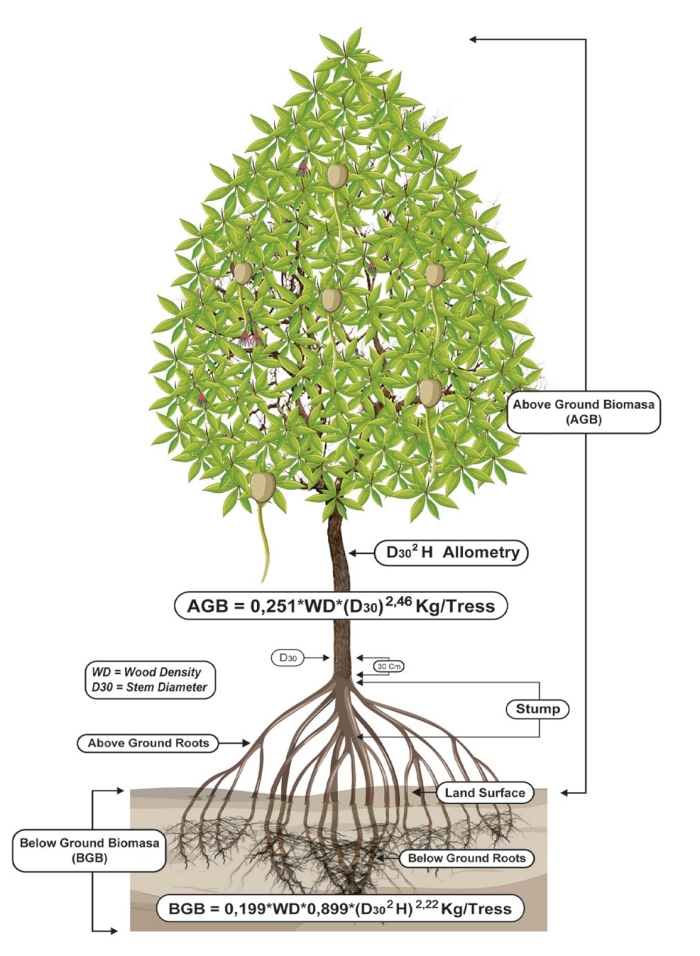
- Non-destructive method: 2 allometrics; 2 sub-ecosystems; 2, 4, 6, 8, 10, 12 and 30 years; and at 5 soil carbon depth (0 – 15; 15 – 30; 30 – 50; 50 -100; and 100 – 200 cm).
- Correlation between carbon stocks and sediment factors and local climate parameters.
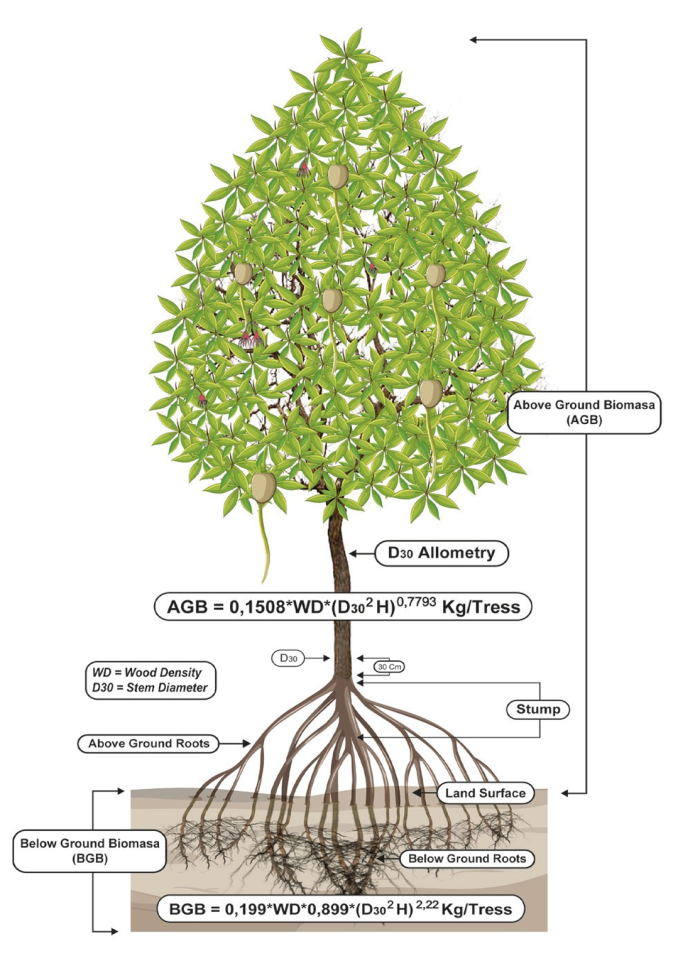
Carbon sequestration is calculated based on the annual growth of
vegetation carbon stocks of mix species in pond-, riverbank- and coastline sub-ecosystem plus annual SOC evolution
SCIENTIFIC PUBLICATIONS :
- Ecosystem carbon Stocks of Restored Mangroves and Its Sequestration in Northern Sumatra Coast, Indonesia; Universal Journal of Agricultural Research 10(1): 1-19, 2022 http://www.hrpub.org DOI: 10.13189/ujar.2022.100101.
- Vegetation carbon stocks of 2 -12 year restored mangrove in Northern Sumatra Coast. Asian Jr. of Microbiological Biotech. Env. Sc. Vol. 22 (2) : 2020 : 135-151 © Global Science Publications ISSN-0972-3005.
- Mangrove species diversity and carbon stock in silvo fishery ponds in
- Deli Serdang District, North Sumatra, Indonesia. BIODIVERSITAS ISSN: 1412-033X. Volume 23, Number 2, February 2022 E-ISSN: 2085-4722. Pages: 655-662.
- The Malacca Straits Coastal Biodiversity in Aceh & North Sumatra – Book.
Universal Journal of Agricultural Research 10(1): 1-19, 2022
DOI: 10.13189/ujar.2022.100101
Ecosystem Carbon Stocks of Restored Mangroves and Its Sequestration in Northern Sumatra Coast, Indonesia
Bambang Suprayogi 1,*, J. Purbopuspito 2, Meilinda Suriani Harefa 3, G. Y. Panjaitan 4, Z. Nasution 5
http://www.hrpub.org
Article-21
Asian Jr. of Microbiol. Biotech. Env. Sc. Vol. 22 (2) : 2020 : 135-151
© Global Science Publications
ISSN-0972-3005
Vegetation Carbon Stocks Of 2 – 12 Year Restored Mangroves In Northern Sumatra Coast
Bambang Suprayogi 1, Soemarno 2, E. Yuli 3, D. Arfiati 4, J. Purbopuspito 5, G.Y. Panjaitan 6, Meilinda S Harefa 7 And Zulkifli Nasution 8
BIODIVERSITAS
Volume 23, Number 2, February 2022
Pages: 655-662
Mangrove species diversity and carbon stock in silvofishery ponds in Deli Serdang District, North Sumatra, Indonesia
Meilinda Suriani Harefa 1,2,©, Zulkifli Nasution 3, Miswar Budi Mulya 4, Azhar Maksum 5
ISSN: 1412-033X
E-ISSN: 2085-4722
DOI: 10.13057/biodiv/d230206
Universal Journal of Agricultural Research 10(3): 249-265, 2022
DOI: 10.13189/ujar.2022.100307
Silvofishery: In What Mangrove Coverage Condition Can this System Provide Benefits for the Community?
Meilinda Suriani Harefa1,*, Zulkifli Nasution2, Miswar Budi Mulya3, Azhar Maksum4
http://www.hrpub.org

Coastal resources have been, and will continue to be, placed under multiple, intense and often competing pressures. The coastal water of Malacca Straits one of the world’s richest ecosystems characterized by extensive dense mangrove forest. Endowed with warm tropical climate and high rainfall, these waters are further enriched by nutrients from the land which enable them to support a wide diversity of marine life. The economic benefits could be derived from them, consequently the coastal zone s of Malacca Straits is heavily populated.
It is essential to consider coastal resources of Malacca Straits as valuable assets that should be utilized on a sustainable basis. Overuse of some resources has caused grave problems. Indiscriminate logging of mangrove might have brought large economic benefit to revenues, but could prove detrimental to coastal activities such as fisheries, coastal tourism. The coastal zone of Malacca Straits is subjected to increasing population and economic pressures manifested by a variety of coastal activities, notably, f ishing, aquaculture, fishpond, waste disposal, tanker traffic, rural construction and industrialization. This situation is aggravated by the expanding economic activities attempting to uplift the standard of living of coastal people, the majority of which live below the official poverty line.
The links between global and local activities related to Malacca Straits management and planning are important. Yagasu which was supported by the international funding such as livelihood play an important rule in this area
