Yagasu Selected as a Finalist in Climate Impact Innovations Challenge 2026
Author: Grace Yanti Panjaitan, S.Hut, M.Si
Yagasu was selected as one of nine finalists in the Climate Impact Innovations Challenge (CIIC) 2026, competing against more than 850 applications from approximately 60 countries on three major climate action areas: Energy Transition, Food & Nature Solutions, and Circular Economy.
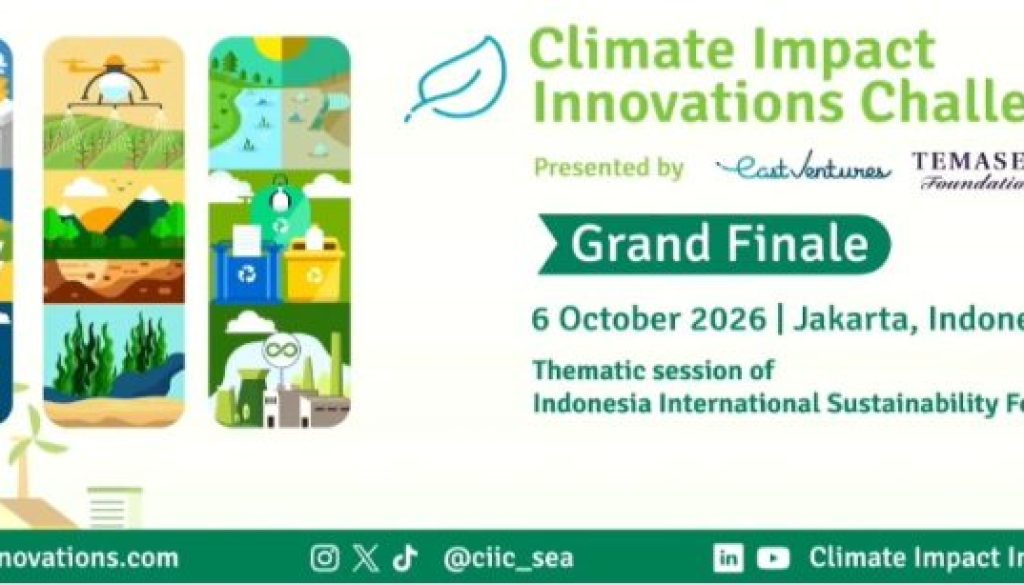
The Climate Impact Innovations Challenge (CIIC) is one of Indonesia’s leading climate technology competitions, established in 2022 to identify, support, and accelerate innovative solutions that can contribute to meaningful climate action in Indonesia. The fourth edition of CIIC, launched in April 2026, culminated in its Grand Finale on 6 October 2026 as part of the prestigious Indonesia International Sustainability Forum (ISF) 2026.
The Grand Finale brought together climate innovators, investors, policymakers, and sustainability leaders. The event featured a panel discussion with Rahayu Saraswati Djojohadikusumo, Deputy Chairperson of Commission VII of the House of Representatives of the Republic of Indonesia, and a keynote address by Agus Rusly, S.Pi., M.Si., Director of Waste Reduction and Circular Economy Development at the Ministry of Environment of the Republic of Indonesia.
Yagasu’s Blue Carbon Innovation
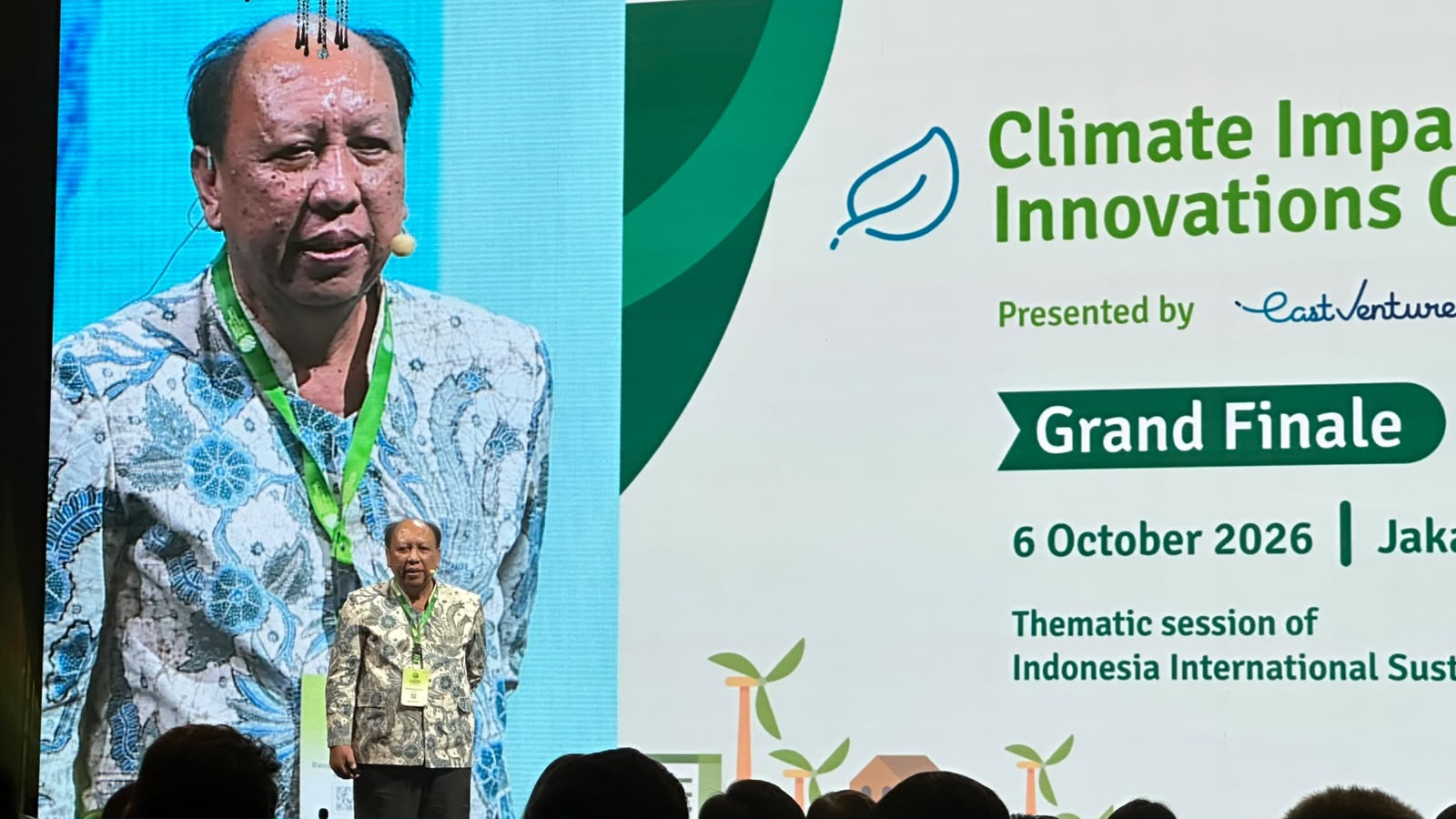
Representing Yagasu at CIIC 2026, Yagasu CEO Bambang Suprayogi presented the organization’s proposed innovation, “Mangrove Restoration and Conservation for Carbon Credits and Commercialized Mangrove-Based Products.”
The proposal responds to some of the most urgent challenges facing Indonesia’s coastal areas, particularly along the northern coast of Java, where sea-level rise, coastal abrasion, and extensive mangrove degradation are threatening both communities and economic infrastructure.
Java has experienced a dramatic decline in mangrove ecosystems. Yagasu’s proposal highlighted an estimated 86% loss of mangrove area along the Java coast, from approximately 280,000 hectares in the 1980s to around 39,285 hectares in 2025. The resulting loss of natural coastal protection has contributed to increasing vulnerability to coastal flooding and abrasion.
The scale of the challenge has also prompted the Indonesian Government to pursue major coastal protection measures, including the development of approximately 575 kilometres of coastal protection infrastructure along the northern coast of Java, complemented by mangrove restoration. Against this backdrop, Yagasu proposed a model that combines blue carbon, mangrove restoration and conservation, community-based livelihoods, and nature-based coastal protection.
Building a Sustainable Blue Carbon Model
Yagasu’s approach is built on the principle that mangrove conservation will be more sustainable when local communities directly benefit from the ecosystem and the economic value it generates. Under the proposed model, revenue from carbon credits can be shared with coastal communities, creating an additional economic incentive to protect and maintain mangrove ecosystems. At the same time, communities can develop mangrove-based products, moving from traditional processing toward higher-value products that can enter commercial and fair-trade markets.
The approach therefore goes beyond carbon credits. Healthy mangroves can simultaneously store and remove carbon, support local livelihoods, and protect communities from flooding, coastal erosion, and wave impacts.
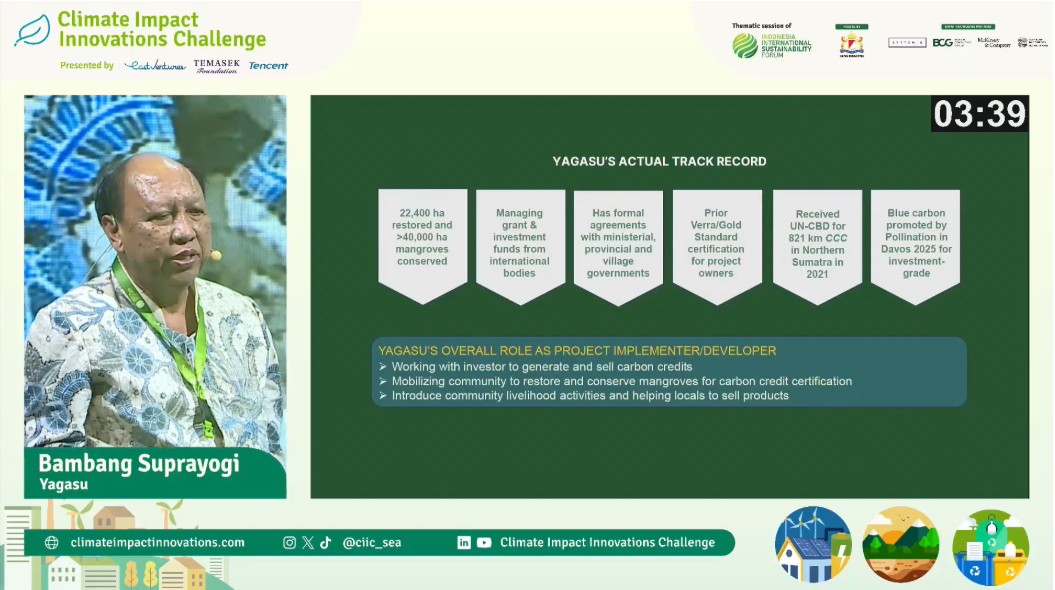
Yagasu brings more than 15 years of experience in mangrove restoration, conservation, and climate-related projects. During this period, the organization has supported the restoration of approximately 22,400 hectares of mangroves and the conservation of more than 40,000 hectares.
Yagasu has also managed grants and investment funds from international institutions and established formal partnerships with national ministries, provincial governments, and village authorities. Its experience includes projects associated with Verra and Gold Standard certification, as well as recognition from the UN Convention on Biological Diversity (CBD) in 2021 for its 821-kilometre Community Conservation Corridor in northern Sumatra.
In 2025, Yagasu’s blue carbon work was also promoted by Pollination at the World Economic Forum in Davos as having potential for investment-grade blue carbon opportunities.
Through CIIC, Yagasu proposed implementing 60 hectares of ARR (Afforestation, Reforestation and Revegetation) restoration and 1,200 hectares of REDD+ conservation over a two-year period.
From a business perspective, the proposed model estimates a production cost of approximately US$4.33 per tCO₂e and a potential gross profit of around US$2.08 million, equivalent to approximately 5.47 times the initial investment.
Recognition and Support from the CIIC Community
Although Yagasu did not win one of the three main CIIC track awards, its participation as a finalist placed its blue carbon model among nine climate innovations selected from a highly competitive international field.
The three CIIC 2026 track winners were CRecTech for Energy Transition, Blueyou for Food & Nature Solutions, and MacroCycle Technologies for Circular Economy. Each winner received Rp5 billion in catalytic funding to pilot their solutions in Indonesia.
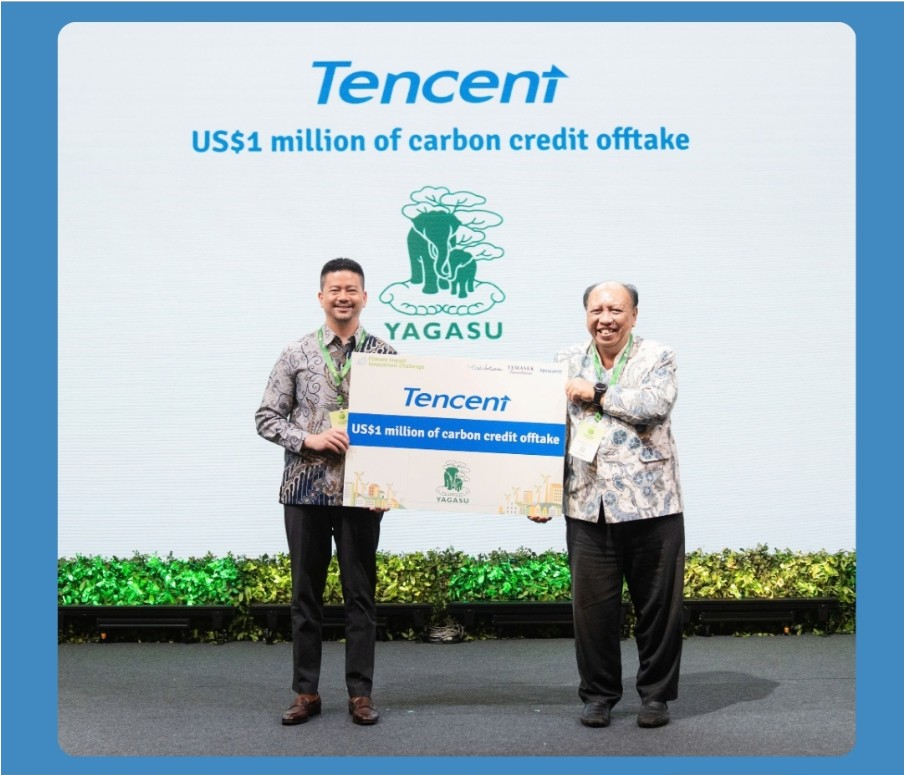
Importantly, Yagasu also received a major commitment announced during the Grand Finale, with Tencent committing US$1 million in carbon credit offtake to Yagasu. This commitment provides an important opportunity to further develop and scale Yagasu’s blue carbon initiatives in Indonesia.
Yagasu’s vision is clear: to build a profitable and sustainable blue carbon business while restoring coastal ecosystems, strengthening the livelihoods of coastal communities, and safeguarding Indonesia’s natural heritage for future generations.